
Healthcare Lab Design Trends 2026: Smaller Footprints, Bigger Flexibility
On a recent Tuesday morning, a hospital planning team walked us through their wish list: more throughput in the same footprint, faster changeovers between protocols, better sightlines for clinicians and researchers to work side by side, and fewer detours to find tools or data. We’ve heard versions of this story all year. Space is tight, projects favor renovation over new build, and priorities shift quickly. That’s why the 2026 playbook isn’t about any one product—it’s about building flexible connections focused, heads-down work and the spaces that support everyday activity.
1) The big shift: integration beats expansion
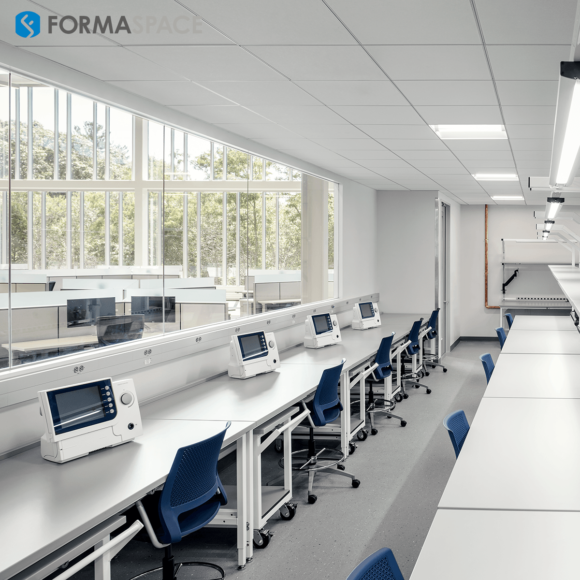
When heads-down and analysis zones sit within true working distance of wet and technical bays, information flows in quick loops instead of long walks and inboxes. Think clear sightlines, aligned workflows, and short handoffs. This is the practical heart of the NextGen Labs approach: treat on-carpet and off-carpet as one ecosystem so the space adapts as work evolves.
2) Designing the handoff (without adding square feet)
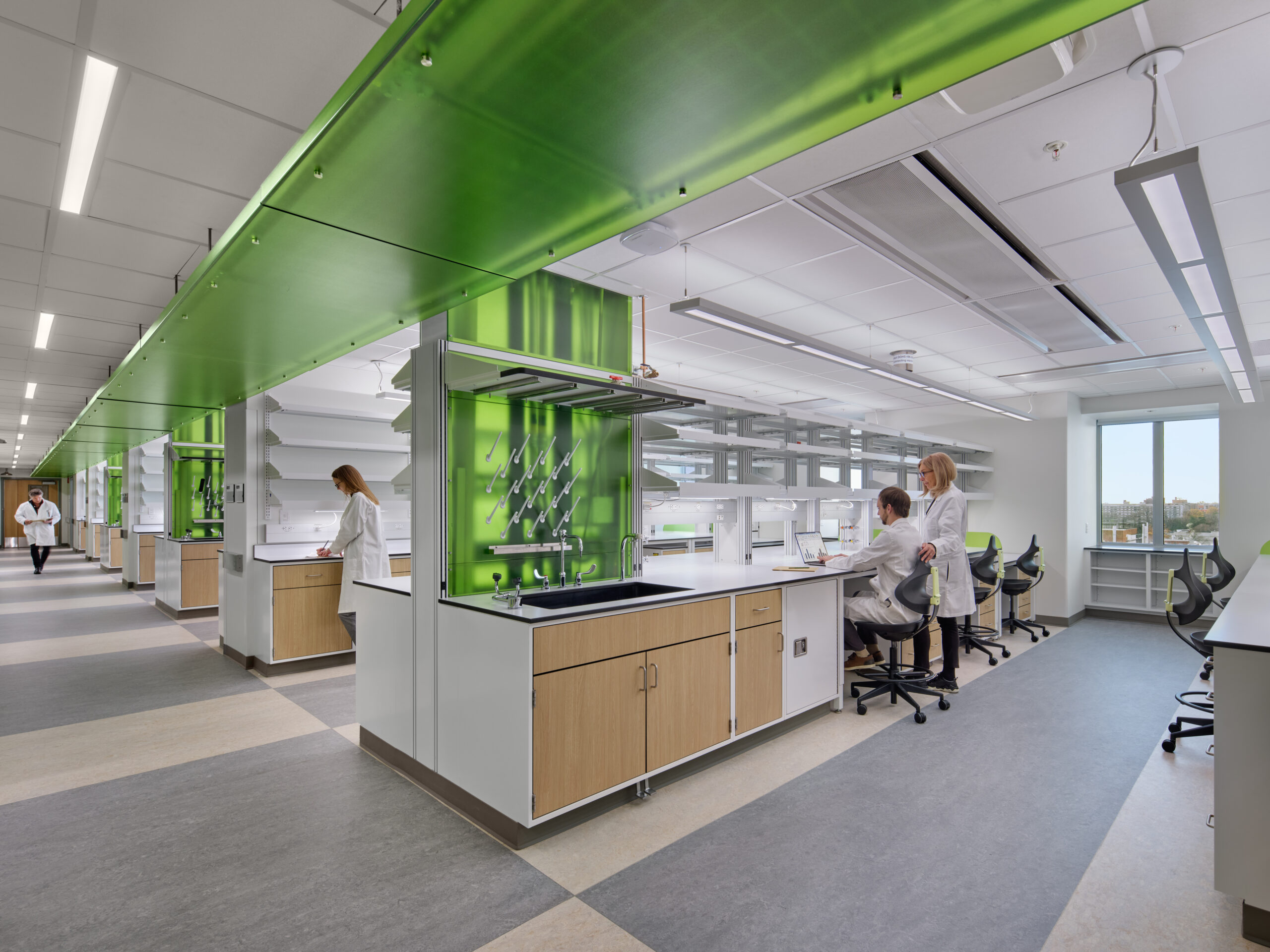
Start by placing data and documentation where the work happens. ELN/LIMS (Electronic Lab Notebook/Laboratory Information Management System), barcode scanners, and small displays can live on swing arms at the lab bench so a conversation at the collaboration table can turn into action in minutes. Use demountable glass or low partitions to keep teams visible to one another. Align collaboration areas with nearby service spines so people can pivot from “plan” to “perform” without a room change. The goal isn’t to add more rooms; it’s to shorten the distance between decision and execution.
3) Make flexibility your first spec
Reconfiguration should be routine, not a construction project. We see three decisions consistently pay off:
- Standardize critical dimensions—bench heights, rail/hole patterns, common shelf spans—so instruments and accessories can move across bays without special adapters.
- Where integrated utilities are required, the FLX Services Lab Bench works as a back-to-back service spine for collaborative teams with utilities, clean cable management and stable, clutter-free surfaces.
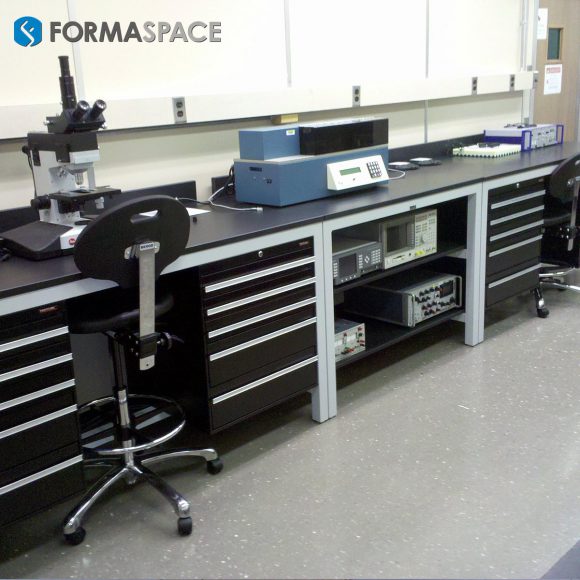
- When hard-plumbed or panel-mounted services aren’t needed, consider “5.0” workbenches—Basix and Benchmarx— for configurable workbench setups that handle daily use on both on-carpet and off-carpet areas:
- Pair your bench choice with RGX Modular Casework by the wall so storage and utilities can evolve as programs change—from sample prep today to imaging or light assembly tomorrow—without extended downtime.

4) Layouts that feel bigger than they are
Replace isolated “islands” with service spines that tighten the footprint and tame cables. Right-size aisles for carts and frequent passes; too wide wastes space, too narrow slows everything. Use vertical real estate—adjustable shelving, overhead rails, peg boards—to add capacity without adding square feet. Zone by what’s done most and what needs control: put frequent bench work and oversight-heavy tasks near the center; locate hazardous steps (acid handling, sterile compounding, high-speed spins) in dedicated, contained areas; keep low-touch storage farther out.
5) Services and cable discipline (your hidden space saver)
Messy utilities can swallow a room. Plan them early and keep them accessible:
- Consolidate power and data in raceways, and use panel-mount ports at the bench to avoid laptop and monitor cables draping across work surfaces.
- Align quick-connects for gases and vacuum in consistent locations so changeovers are predictable.
- If walls are saturated—or if flexibility is paramount—run services overhead using ceiling carriers or booms. Keeping services above the bench makes reconfiguration faster and keeps the work surface clear.
- Label everything. Color-coded lines and simple legends lower changeover time and training overhead.
6) Storage that shortens trips
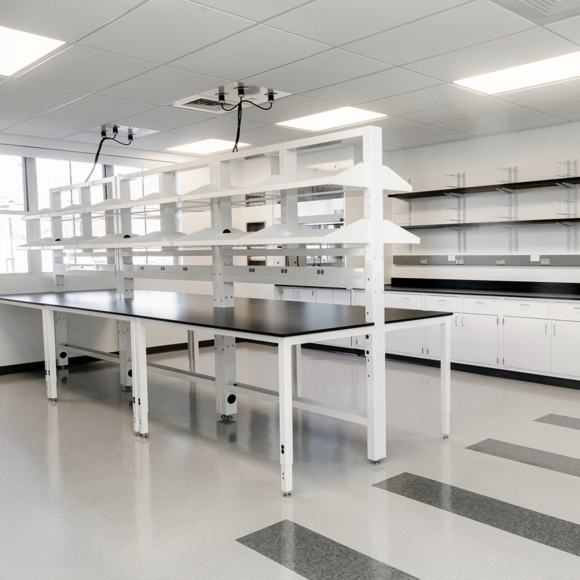
A smart storage strategy makes rooms feel larger and teams feel faster:
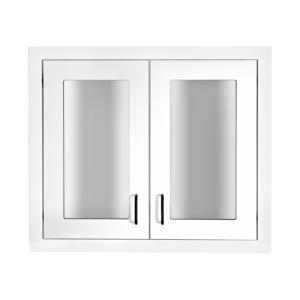
- Size cabinets for the carriers and trays you actually use; modular interiors avoid dead space.
- Stage mobile carts for kit-based work so everything needed for a task travels together.
- Add shadow boards and small-parts organizers at each bay.
- Include specialized safety storage—acid cabinets, flammable cabinets—placed logically relative to use and egress.
7) Countertops that match the work
Cleanability is table stakes in healthcare; material choice still matters. Here’s a quick, practical comparison:
- Epoxy resin
Strengths: broad chemical and heat resistance; integral sinks possible; very durable.
Consider: heavy; longer lead times; repairs can be specialized.
Best for: harsh wet chemistry; frequent spill risk. - Phenolic resin
Strengths: excellent chemical resistance for most healthcare labs; lighter than epoxy; good impact resistance; cost-effective.
Consider: sustained high heat not as strong as epoxy.
Best for: general wet labs and frequent wipe-downs. - Stainless steel
Strengths: superior cleanability; corrosion resistance to many disinfectants; integral sinks; ideal for hygienic wipe-downs.
Consider: scratches show; not ideal for every reagent.
Best for: high-cleanability zones, tissue culture support, carts and mobile surfaces.
Match cabinet interiors to your cleaning protocol and post simple SOP (standard operating procedure) labels at the bay (agents, dwell times, frequency) so compliance is obvious.
8) Ergonomics that keep teams fresh
Multi-shift teams need furniture that fits everyone, all day. Height-adjustable benches reduce strain and make rotations easier. Plan reach envelopes so frequently used items stay at neutral height. Add task lighting where eyes spend time, and manage acoustics near analysis stations. Comfort isn’t a luxury—it protects accuracy and helps retain talent.
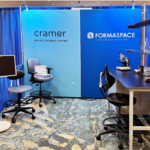
Cramer lab chairs pair the comfort teams want with the cleanability healthcare demands. Specify models that shift quickly between desk, bench, and extra-tall heights, with a supportive back and simple lumbar tuning so multi-shift users stay fresh. Seam-minimized, wipe-clean finishes stand up to hospital disinfectants, while a footring keeps posture relaxed at lab height. Use glides where stations stay put and casters where tasks roam, and standardize a small set of cylinder heights so seat swaps don’t slow a shift. For quick huddles, perch stools near collaboration points keep people moving without inviting long sit-downs.
9) From idea to submittal, without friction
If you want to test ideas quickly, start with our 3D Configurator to assemble a healthcare workbench in minutes: https://formaspace.com/3d-virtual-workbench-builder/
When you’re ready for coordination, we convert concepts into technical packages that work for your partners:
- Dealers can configure, coordinate, and quote in CET.
- Architects and engineers can specify with Revit families for streamlined clash checks and MEP notes.
We’ll help you keep the documents consistent so approvals move fast and procurement stays clean.
Why Formaspace
Formaspace designs and manufactures lab furniture built for change—from the FLX Services Lab Bench that anchors collaboration to RGX Modular Casework that scales across rooms and sites, plus rugged Basix and Benchmarx workbenches when integrated utilities aren’t required. Since 1981, we’ve supported healthcare, life sciences, and commercial programs with engineered solutions made in the USA—custom fit where it matters, consistent where it counts.
Planning a 2026 refresh or renovation? Share your floor plans and goals, and our team will translate them into an installation-ready package tuned to your program’s needs. Start the conversation: https://formaspace.com/contact/#consultants