
Artificial intelligence expansion is no longer a future initiative. For facilities managers and A&D teams, it is an active build cycle. Capital budgets for AI infrastructure are expanding, and with them, expectations around speed, performance, and long-term scalability.
AI compute environments are being planned, retrofitted, and deployed at a pace that challenges traditional design and procurement timelines. Power densities are increasing. Hardware refresh cycles are accelerating. Multi-site rollouts are becoming common.
But the pressure is not just technical. It is organizational.
Facilities leaders are being asked to deliver speed without sacrificing long-term adaptability. Architects and designers must create environments that support high-density compute, electronics integration, monitoring operations, and collaborative data science within the same project scope.
In this environment, furniture and casework decisions are no longer secondary details. They influence workflow efficiency, equipment flexibility, installation sequencing, and future upgrade paths.
AI compute labs are not simply server rooms. They are integrated ecosystems of technical and collaborative spaces. When these environments are designed without coordination, friction emerges quickly. When they are planned as scalable systems, organizations gain operational clarity and long-term resilience.
Scaling AI infrastructure requires more than square footage. It requires intentional AI lab design that anticipates change, aligns stakeholders, and supports performance from day one.
AI Compute Labs Are Not Just Server Rooms
When people hear “AI infrastructure,” they often imagine rows of racks inside AI data centers.
But the reality inside AI companies is far more layered.
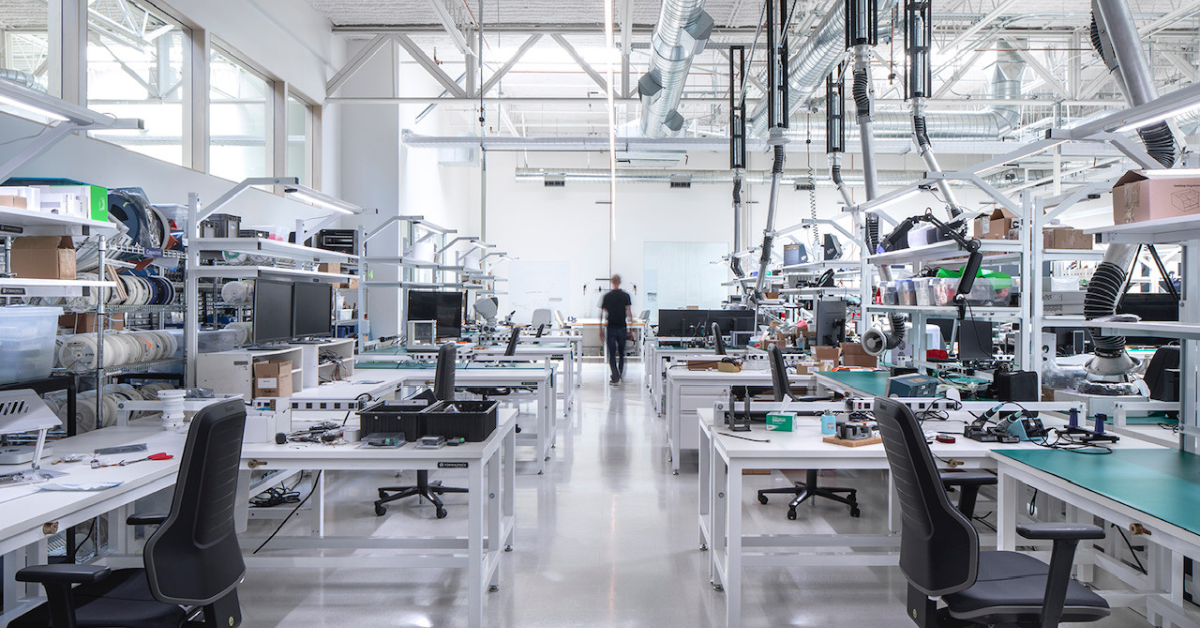
A modern AI environment may include:
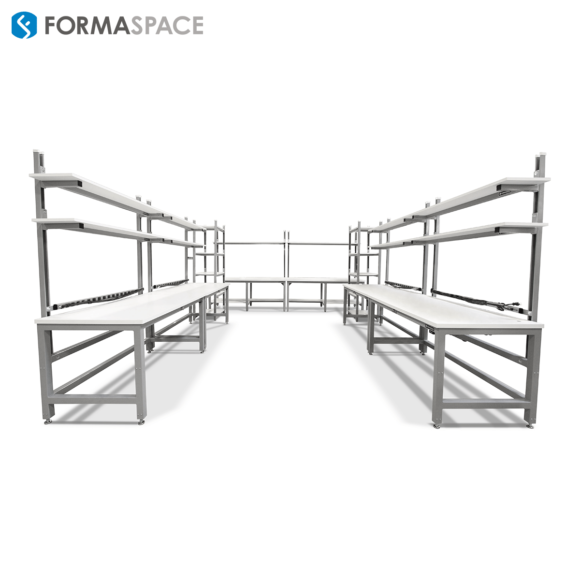
- High-density compute rooms
- Hardware staging and integration labs
- Electronics testing benches
- Robotics development areas
- Network operations and monitoring stations
- Data science collaboration zones
- Strategy and product team spaces
These environments are interdependent. Hardware engineers move between staging and testing. Data scientists step from collaboration areas into AI compute labs to troubleshoot performance. Operations teams monitor systems while coordinating with model training groups.
If these zones are physically disconnected or furnished without regard to workflow, friction appears quickly.
Strong AI lab design recognizes that flow and plans for it from the beginning.
The Hidden Risks in Fast-Track AI Expansion
AI organizations are building fast. Facilities teams are being asked to support:
- New AI data centers
- Temporary or modular compute environments
- Multi-site rollouts
- Accelerated hardware refresh cycles
In that environment, furniture and infrastructure decisions that once felt minor can become operational bottlenecks.
Common pain points include:
- Casework that cannot adapt to changing equipment
- Workstations that must be replaced instead of reconfigured
- Inconsistent standards across sites
- Vendors who understand office furniture but not technical environments
- Delays caused by fragmented sourcing and unclear accountability
AI compute labs are technical environments. The furniture supporting them should be designed with the same level of precision and foresight.
When AI lab design does not anticipate change, growth becomes disruptive instead of strategic.
Integrating Compute Labs and Collaboration Zones
Many AI companies are rethinking how their facilities are organized. Not just for efficiency, but for culture.
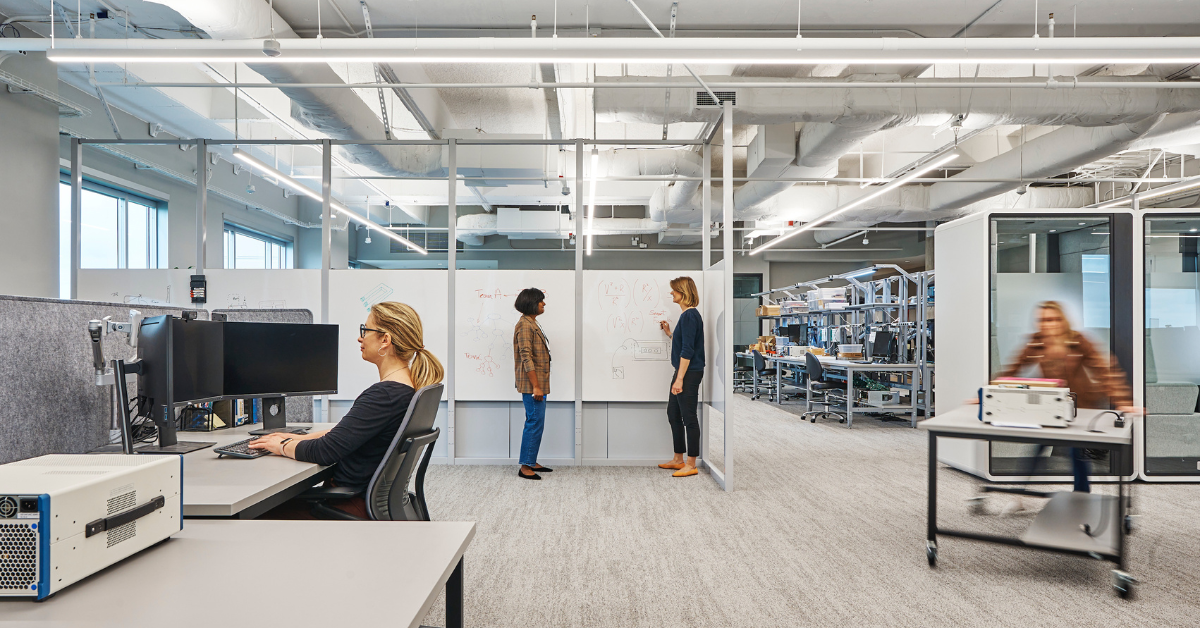
We often describe advanced environments in simple terms: on-carpet and off-carpet spaces.
Off-carpet spaces
- AI compute labs
- Hardware staging and testing
- Robotics and electronics development
These areas demand durability, stability, and flexibility for evolving equipment.
On-carpet spaces
- Data science workstations
- Monitoring and operations stations
- Collaboration and strategy areas
These spaces benefit from visibility, ergonomic comfort, and adaptability as teams grow.
In high-performing AI organizations, these zones are not isolated from each other. They are intentionally connected.
When engineers, data scientists, and operations teams move fluidly between AI compute labs and collaboration areas, communication accelerates. Problems are resolved faster. Innovation feels tangible and shared.
Integration is not just a layout decision. It is an operational philosophy.
Designing Flexible Furniture for AI Compute Labs
As AI hardware evolves, so do spatial requirements. Power densities shift. Equipment footprints change. Teams expand and reorganize.
Rather than building fixed environments that require demolition during upgrades, leading organizations prioritize flexibility from the start.
That includes:
- Modular casework that can be reconfigured
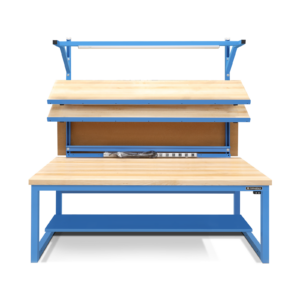
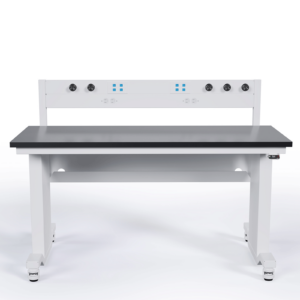
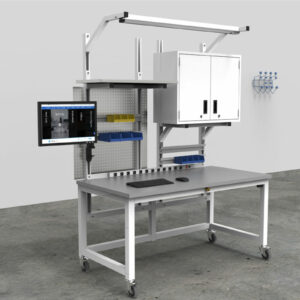
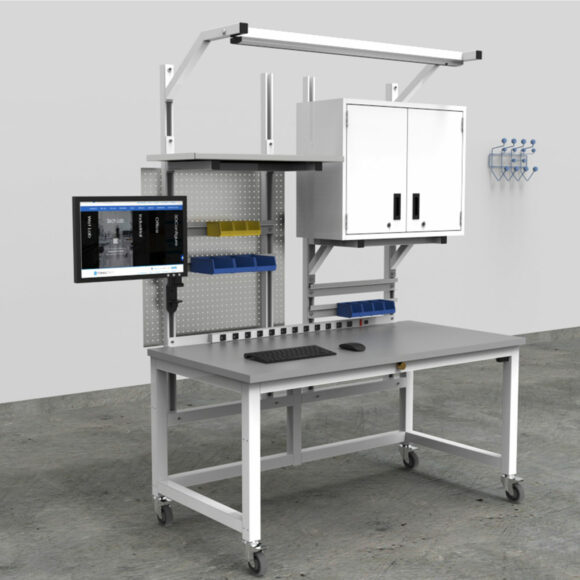
- Workbenches designed for electronics assembly and testing
- Durable surfaces that withstand continuous use
- Standardized components across multiple sites
- Coordinated finishes and specifications
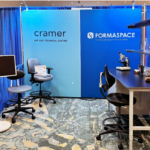
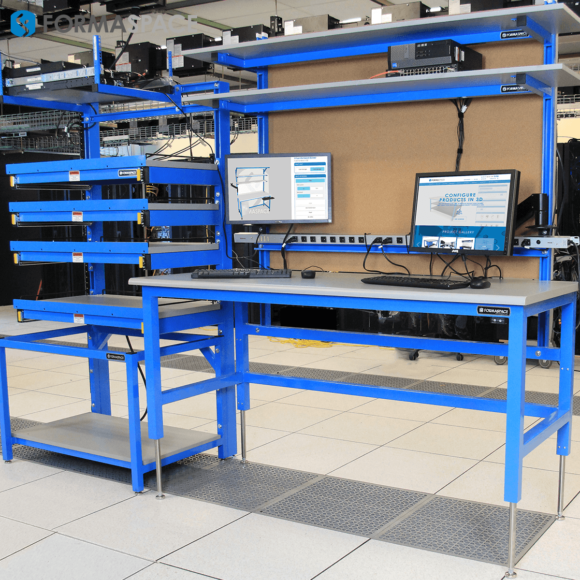
For electronics-heavy AI compute labs, platforms like Triton workbenches provide industrial-grade durability and modular flexibility suited for staging, integration, and technical assembly environments.
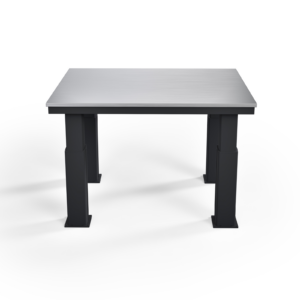
For monitoring stations, diagnostics, and technician support zones, Basix and Benchmarx workstations provide scalable, standardized solutions that help maintain consistency across multiple rooms, labs, or sites.
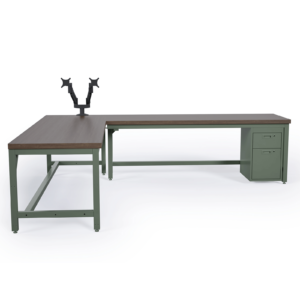
For highly specialized needs, custom workbenches allow organizations to tailor dimensions, storage, and accessories around specific equipment and workflows.
Modular solutions such as RGX Modular Casework support adaptable storage and evolving configurations as programs scale.
Ergonomic lab chairs complete the ecosystem, ensuring that both on-carpet and off-carpet users are supported through long development cycles.
The objective is not to create rigid standards. It is to create a coordinated system that scales.
When an organization expands from one AI compute lab to several AI data centers, consistency reduces rework, simplifies approvals, and protects long-term investment.
Why Coordination Matters Across Sites
In high-growth environments, furniture decisions are often made by different teams across different regions. Over time, this can result in:
- Material inconsistencies
- Specification confusion
- Maintenance challenges
- Slower approvals for new locations
- Increased total cost of ownership
A coordinated manufacturing partner does not mean one-size-fits-all. It means a structured framework that allows customization without sacrificing alignment.
For organizations planning multi-site AI data centers or expanding AI compute labs, that coordination becomes critical. It supports faster design-through-approvals processes and reduces the likelihood of costly rework during installation.
Speed matters. Alignment matters more.
AI Lab Design Is Also About Talent
There is another dimension often overlooked in conversations about AI data centers: people.
The engineers and researchers building advanced models expect environments that reflect the sophistication of their work.
Thoughtful AI lab design considers:
- Clear sightlines between compute and collaboration zones
- Organized staging areas that reduce cognitive load
- Ergonomic seating and work surfaces
- Clean, intentional material palettes
- Spaces that support both focus and teamwork
When AI compute labs and collaboration zones feel integrated rather than improvised, culture strengthens.
Science becomes visible.
Engineering feels central.
Innovation becomes part of the daily environment, not just the roadmap.
In competitive hiring markets, that difference is meaningful.
Visualize Before You Build
Rapid expansion leaves little room for guesswork.
Formaspace provides tools that help teams visualize and coordinate early:
- The 3D Configurator enables fast layout exploration for technical workstations and casework:
https://formaspace.com/3d-virtual-workbench-builder/ - Dealers coordinate through CET.
- Architects and designers integrate specifications through Revit.
These tools help align stakeholders before fabrication begins, especially valuable when multiple AI compute labs are under development simultaneously.
Partner with Formaspace to Scale with Confidence
Formaspace designs and manufactures American-made laboratory, industrial, and workplace furniture for high-performance environments, including AI compute labs and adjacent collaboration spaces.
Our approach centers on One Manufacturer for All Spaces, creating a coordinated ecosystem across AI data centers, integration labs, and on-carpet work zones. The result is reduced specification friction, consistent quality, and environments built to evolve alongside your technology.
If your organization is planning new AI data centers, expanding AI compute labs, or refining your AI lab design strategy, our consultants are ready to support your team.
Start the conversation here:
https://formaspace.com/contact/#consultants
In artificial intelligence, performance is measured in milliseconds. The environments that support it should be designed with the same level of intention.