

Walk through almost any modern laboratory today and you’ll notice something interesting: the work is changing faster than the job titles.
Automation platforms are running experiments overnight. AI systems are proposing new molecular structures or identifying patterns in genomic datasets. Robotic arms are pipetting samples while cloud platforms coordinate data across research teams on different continents.
Yet many labs are still organized around roles that were defined decades ago — principal investigators, lab technicians, data analysts, and facility managers.
That mismatch is beginning to create new responsibilities inside research organizations. Someone has to translate AI-generated insights into testable experiments. Someone must design automation systems that allow robotic platforms, instruments, and software to work together. Someone needs to oversee the data pipelines and computational infrastructure that modern discovery depends on.
In other words, as labs adopt AI, automation, and digital infrastructure, entirely new job functions are emerging.
Some of these roles already exist in early form at major pharmaceutical companies, AI-driven biotech startups, and large research universities. Over the next five years, many of them are likely to become standard positions across healthcare, life sciences, and advanced R&D labs.
Below are 10 new roles that may soon become common in research laboratories — and the signals already suggesting they’re on the way.
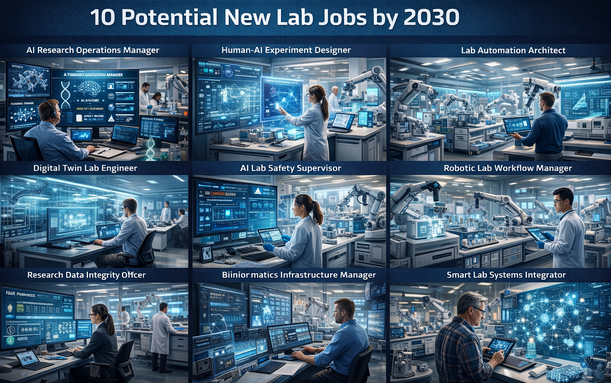
Potential Lab Jobs by 2030
| Role | Primary Focus | Skillset | Environment | Works Closely With |
| AI Research Operations Manager | AI research infrastructure | ML systems, data pipelines, operations | On-carpet | Data scientists |
| Human-AI Experiment Designer | AI-assisted experiment design | Science + machine learning | Both | Researchers |
| Lab Automation Architect | Designing robotic labs | Robotics, systems engineering | Off-carpet | Automation engineers |
| Digital Twin Lab Engineer | Virtual lab simulation | Modeling, simulation | On-carpet | Engineers |
| AI Lab Safety Supervisor | Safety in automated labs | Safety engineering, AI monitoring | Both | Compliance teams |
| Robotic Lab Workflow Manager | Managing robotic experiments | Automation, operations | Off-carpet | Lab technicians |
| Research Data Integrity Officer | Scientific data governance | Data compliance, QA | On-carpet | Regulatory teams |
| Bioinformatics Infrastructure Manager | Genomic computing systems | Bioinformatics, HPC | On-carpet | Biologists |
| Smart Lab Systems Integrator | Instrument and system connectivity | IoT, lab instrumentation | Both | Facility managers |
| Scientific Knowledge Graph Curator | Structuring scientific knowledge | Data science, ontology | On-carpet | AI researchers |
1. AI Research Operations Manager
Core Role
The AI Research Operations Manager oversees the infrastructure and workflows that support AI-driven research programs. As laboratories increasingly rely on machine learning models, high-performance computing, and automated data pipelines, this role ensures the digital research ecosystem runs reliably and efficiently.
This professional acts as the operational bridge between data scientists, laboratory researchers, IT infrastructure teams, and compliance specialists.
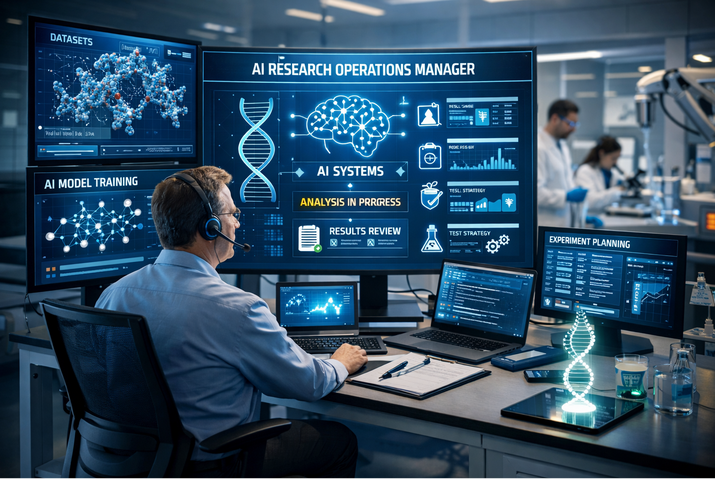
Typical Responsibilities
- Managing GPU clusters and cloud environments used for AI training
- Coordinating data pipelines between lab instruments and machine learning systems
- Maintaining version control for datasets and AI models
- Implementing governance standards for reproducible research
- Supporting collaboration between computational scientists and experimental teams
Why This Role Is Likely to Appear
AI-driven research introduces major operational complexity. Large datasets, specialized computing hardware, and automated experimentation systems require dedicated oversight to ensure reliability and scalability.
As AI becomes embedded in research workflows, laboratories will need professionals who manage the AI infrastructure behind discovery.
Real-World Signals
Early versions of this role already exist in companies like:
- Recursion Pharmaceuticals
- Insitro
- Tempus
Common titles today include:
- ML Platform Manager
- Research Operations Lead
- AI Infrastructure Manager
2. Human-AI Experiment Designer
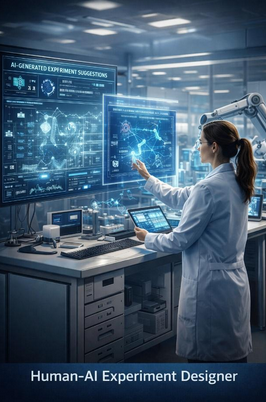
Core Role
The Human-AI Experiment Designer collaborates with artificial intelligence systems to design and refine laboratory experiments. AI models increasingly generate predictions about biological systems, chemical interactions, and material properties. This professional translates those insights into practical experiments.
The role creates a feedback loop between AI predictions and laboratory validation.
Typical Responsibilities
- Evaluating hypotheses generated by machine learning models
- Designing experiments to test AI predictions
- Integrating automation platforms and robotics into experimental workflows
- Feeding experimental results back into AI models for retraining
- Coordinating work between data scientists and laboratory researchers
Why This Role Is Likely to Appear
AI systems can identify patterns across massive datasets, but they still require human expertise to design meaningful experiments. Scientists who can interpret AI insights and convert them into practical research strategies will become increasingly valuable.
Real-World Signals
Examples already exist in organizations such as:
- Insitro
- Recursion Pharmaceuticals
- DeepMind (AlphaFold teams)
These researchers combine machine learning with experimental science to accelerate discovery. Common titles today include:
AI Research Scientist, Applied Machine Learning Scientist, Human-Computer Interaction (HCI) Researcher, Experimental Psychologist (AI), Behavioral Data Scientist, AI Product Researcher.
3. Lab Automation Architect
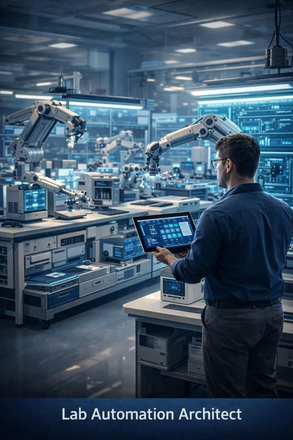
Core Role
The Lab Automation Architect designs robotic laboratory systems that enable high-throughput and autonomous experimentation. As research labs adopt robotics and automated workflows, this role focuses on structuring the entire automation environment.
They design the physical and digital architecture that allows robots, instruments, and software to operate together.
Typical Responsibilities
- Designing robotic workflows for laboratory processes
- Integrating automated liquid handlers, robotics, and sensors
- Optimizing laboratory layouts for automation efficiency
- Coordinating automation hardware with laboratory software systems
- Scaling automated experimentation platforms
Why This Role Is Likely to Appear
Automation is rapidly transforming laboratory research. High-throughput drug discovery, genomic sequencing, and materials science increasingly rely on robotic experimentation.
Labs will require specialists who can design automation environments from the ground up.
Real-World Signals
Companies already investing heavily in automated labs include:
- Strateos
- Emerald Cloud Lab
- Ginkgo Bioworks
These facilities operate large-scale robotic labs that require dedicated automation architecture. Common titles today include:
Lab Automation Engineer, Robotics Engineer (Laboratory), Automation Systems Engineer, Controls Engineer, Robotics Integration Engineer.
4. Digital Twin Lab Engineer

Core Role
The Digital Twin Lab Engineer creates virtual models of laboratory environments, instruments, and experiments. These digital twins allow researchers to simulate experimental outcomes before performing them physically.
This role combines simulation, data modeling, and laboratory engineering.
Typical Responsibilities
- Building digital models of laboratory equipment and workflows
- Running simulations to predict experimental outcomes
- Integrating real-time lab data into digital models
- Supporting predictive maintenance of lab equipment
- Optimizing experiment design through simulation
Why This Role Is Likely to Appear
Digital twins are already widely used in manufacturing and aerospace. As laboratories become more data-driven, virtual experimentation will become a powerful tool for reducing cost and improving efficiency.
Real-World Signals
Organizations already using digital twins include:
- Siemens
- GE Healthcare
- NASA research labs
These technologies are increasingly being applied to biomedical and materials science research environments. Common titles today include:
Simulation Engineer, Digital Twin Engineer, Systems Modeling Engineer, Industrial Simulation Specialist, Model-Based Systems Engineer.
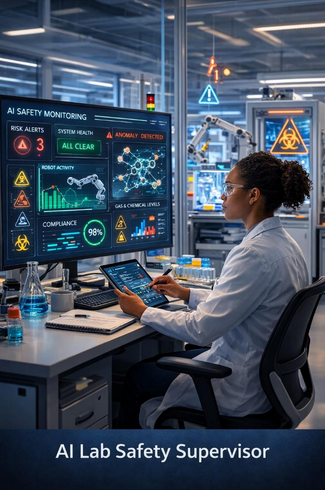
5. AI Lab Safety Supervisor
Core Role
The AI Lab Safety Supervisor monitors laboratory environments where AI systems control experiments, robotics, or chemical processes. As automation increases, safety oversight must adapt to new risks created by autonomous systems.
This role blends traditional lab safety expertise with AI system monitoring.
Typical Responsibilities
- Monitoring AI-controlled experimental systems
- Evaluating risks associated with automated equipment
- Ensuring compliance with regulatory safety standards
- Developing safety protocols for autonomous laboratories
- Investigating incidents involving robotic or AI systems
Why This Role Is Likely to Appear
Automation increases both efficiency and risk. Autonomous laboratories will require new safety frameworks to ensure that robotics, chemical processes, and AI systems operate safely.
Real-World Signals
Safety oversight roles already exist in automated industries such as:
- autonomous manufacturing
- robotics facilities
- semiconductor fabrication plants
As automation spreads into laboratories, similar safety roles will likely emerge. Common titles today include:
Environmental Health & Safety (EHS) Manager, Lab Safety Officer, Biosafety Officer, Compliance Manager, Laboratory Risk Manager.
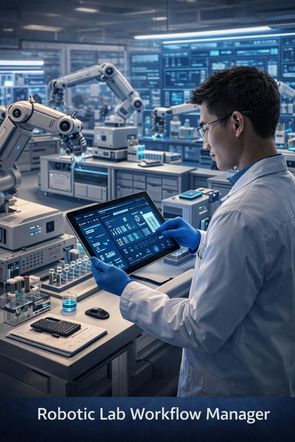
6. Robotic Lab Workflow Manager
Core Role
The Robotic Lab Workflow Manager oversees daily operations in laboratories where robotic systems conduct large portions of experimental work. They coordinate experiments, monitor robotic workflows, and ensure smooth operation of automated research pipelines.
Typical Responsibilities
- Scheduling robotic experiments
- Monitoring automated laboratory systems
- Managing experiment queues and sample logistics
- Troubleshooting robotic systems and workflows
- Coordinating technicians and automation engineers
Why This Role Is Likely to Appear
High-throughput labs increasingly operate like production environments. Managing robotics, experiment scheduling, and data flow requires dedicated operational oversight.
Real-World Signals
Automated laboratories at organizations like:
- Recursion Pharmaceuticals
- Ginkgo Bioworks
- Berkeley Lab A-Lab
already run thousands of experiments weekly using robotic systems. Common titles today include:
Laboratory Automation Manager, Robotics Engineer (Laboratory), Automation Process Engineer, Lab Operations Manager, Robotics Workflow Specialist.
7. Research Data Integrity Officer

Core Role
The Research Data Integrity Officer ensures that scientific data is accurate, traceable, and compliant with regulatory standards. As laboratories generate enormous datasets from automated instruments and AI systems, maintaining data integrity becomes critical.
Typical Responsibilities
- Auditing research datasets for accuracy and consistency
- Maintaining data governance policies
- Ensuring compliance with regulatory frameworks
- Monitoring laboratory information systems (LIMS)
- Preventing data corruption or loss
Why This Role Is Likely to Appear
Healthcare and pharmaceutical research operate under strict regulatory oversight. AI-generated insights must be backed by reliable and traceable data, increasing demand for specialized data governance roles.
Real-World Signals
Data integrity roles already exist in:
- pharmaceutical quality assurance teams
- clinical research organizations
- FDA-regulated research environments
As research data volumes increase, these roles will likely expand. Common titles today include:
Data Governance Manager, Research Compliance Officer, Data Quality Manager, Clinical Data Integrity Manager, Research Data Steward.
8. Bioinformatics Infrastructure Manager

Core Role
The Bioinformatics Infrastructure Manager oversees the computing systems used for genomic analysis and biological data processing. Modern life science research generates massive datasets that require specialized infrastructure.
Typical Responsibilities
- Managing genomic data storage systems
- Maintaining bioinformatics analysis pipelines
- Coordinating computing resources for sequencing projects
- Supporting researchers working with large biological datasets
- Ensuring data security and accessibility
Why This Role Is Likely to Appear
Genomic sequencing, proteomics, and multi-omics research are producing unprecedented volumes of biological data. Managing this infrastructure requires dedicated expertise.
Real-World Signals
Large genome research centers already employ teams managing computational infrastructure for sequencing and biological data analysis. Common titles today include:
Bioinformatics Platform Engineer, Computational Biology Infrastructure Lead, Scientific Computing Manager, Genomics Data Platform Engineer, Research IT Manager.
9. Smart Lab Systems Integrator

Core Role
The Smart Lab Systems Integrator connects laboratory instruments, sensors, software platforms, and facility systems into a unified digital environment. This role ensures that instruments communicate effectively and that data flows seamlessly across the lab.
Typical Responsibilities
- Integrating laboratory instruments with digital systems
- Connecting IoT sensors and monitoring systems
- Implementing centralized data platforms
- Supporting smart building systems within labs
- Coordinating IT teams and facility managers
Why This Role Is Likely to Appear
Laboratories are becoming increasingly connected environments where instruments, sensors, and software systems interact continuously.
Real-World Signals
Many modern laboratories already deploy:
- smart building sensors
- instrument connectivity platforms
- centralized lab management software
These systems require specialists to integrate them effectively. Common titles today include:
Automation Integration Engineer, Laboratory Systems Engineer, IoT Systems Engineer, Controls Engineer, Lab Technology Integration Specialist.
10. Scientific Knowledge Graph Curator

Core Role
The Scientific Knowledge Graph Curator organizes scientific knowledge into structured data networks that AI systems can analyze. These knowledge graphs map relationships between genes, proteins, chemicals, and diseases.
Typical Responsibilities
- Structuring scientific databases and ontologies
- Building knowledge graphs linking scientific concepts
- Supporting AI systems that analyze scientific relationships
- Integrating literature databases with research data
- Maintaining evolving knowledge models
Why This Role Is Likely to Appear
AI systems require structured knowledge to interpret complex scientific relationships. Knowledge graphs help machines understand how different discoveries relate to each other.
Real-World Signals
Organizations already building scientific knowledge graphs include:
- Google DeepMind
- IBM Watson Health
- Semantic Scholar
These systems organize millions of scientific papers and research datasets. Common titles today include:
Ontology Engineer, Knowledge Graph Engineer, Scientific Data Curator, Semantic Data Engineer, Research Data Architect.
Designing Labs for the Roles That Are Emerging Now
Scientific discovery has always been shaped by the tools available to researchers. The microscope changed biology. Automation transformed manufacturing. And today, artificial intelligence and connected laboratory systems are beginning to reshape how research itself is conducted.
As laboratories become more automated and data-driven, the boundaries between disciplines will continue to blur. Future research teams may include not only chemists and biologists, but also automation architects, AI operations managers, and digital infrastructure specialists.
Some of the roles described above are already emerging in cutting-edge biotech companies, AI research organizations, and automated laboratory platforms. Others may evolve as laboratories adopt new technologies and scale increasingly complex research environments.
What’s clear is that the laboratory workforce of the future will look different from the one we know today. And as research environments continue to evolve, labs will need both new technologies and new expertise to support the next generation of scientific discovery.

How Future Lab Design May Need to Adapt to These Roles
If new roles begin appearing in laboratories, the spaces themselves will also need to evolve.
Many of the positions described above work at the intersection of digital research systems, automation, and experimental science. That means labs will increasingly require environments that support both technical bench work and data-driven analysis.
In practical terms, future labs may include:
Dedicated AI monitoring and analysis stations
As AI-driven research expands, scientists and AI operations teams will need workstations where they can monitor experiments, analyze results, and collaborate in real time.
Automation zones designed for robotics workflows
Robotic experimentation platforms require layouts that allow equipment to scale as research programs grow. Modular infrastructure and flexible utilities will become increasingly important.
Integrated data and collaboration spaces
Many new roles operate in hybrid environments where computational teams work closely with experimental researchers. Spaces that allow easy transitions between discussion, analysis, and experimentation will help teams move faster.
Adaptable lab infrastructure
As research technologies evolve, laboratories may need to reconfigure more frequently. Modular systems, reconfigurable casework, and flexible services can help labs adapt without major renovations.
This type of integration reflects a broader shift toward more connected research environments. Modern lab design increasingly blends off-carpet scientific workspaces with adjacent on-carpet areas for analysis, collaboration, and project coordination, helping research teams communicate more easily and move ideas from concept to experiment more quickly.
As the nature of laboratory work evolves, designing spaces that can support both scientific experimentation and digital research operations will become an important part of future-ready labs.
How Formaspace Helps
The next generation of laboratories will depend not only on new technologies, but also on new kinds of expertise. As AI systems, automation platforms, and large-scale data environments become part of everyday research, the teams working in labs will continue to evolve.
Designing spaces that support these emerging roles will require flexibility. Future labs may need areas for automated experimentation, stations for AI-driven analysis, and collaborative environments where scientists, engineers, and data specialists can work side by side.
Flexible infrastructure can help research environments adapt as technologies and workflows change. Modular systems such as FLX Services Lab Benches, RGX Modular Casework, and scalable workstation solutions like Basix and Benchmarx allow labs to evolve without major renovations.
Companies like Formaspace are already helping organizations plan these future-ready environments, combining adaptable lab furniture with visualization tools like the 3D Configurator to support early design decisions. Contact a Formaspace for your next lab furniture project.