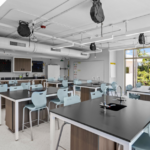

If you’re finalizing budgets and locking in next year’s priorities, now is the time to set a 90-day plan that gets your team to an installation-ready package—layouts, specs, and submittals aligned—by early Q1. The fastest path is a NextGen Labs mindset: plan on-carpet spaces (offices, meeting areas, data-driven work) together with off-carpet spaces (wet and technical lab activities) so people, information, and materials move seamlessly between the two.
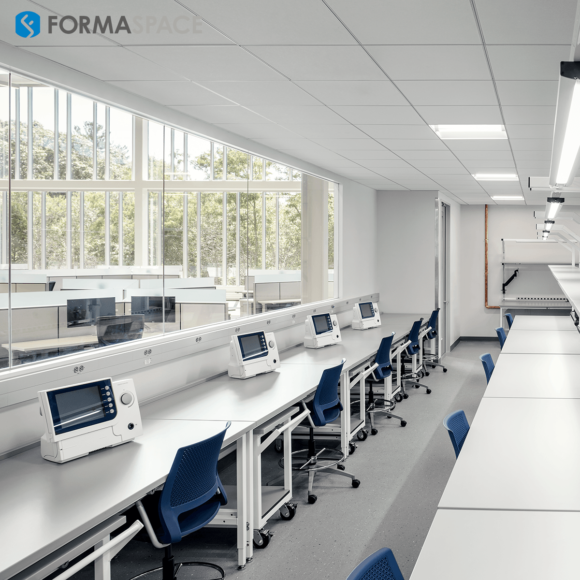
We pair that planning approach with a clear operating model we call One Manufacturer for All Spaces. In practice, it means standardizing benches, casework, and integrated utilities across rooms and sites—so drawings, submittals, procurement, and installation rely on a single, coordinated furniture ecosystem rather than a mix of incompatible parts and suppliers. The result is fewer change orders, smoother approvals, and repeatable quality from project to project. Achieving that consistency requires early coordination with the manufacturer who will standardize the system across every site.
Below is a practical, field-tested 90-day outline you can adapt to your organization. Use what serves you best.
Get Ahead of Q1 Bottlenecks: (Why Plan Now)
Year-end clarity helps: budgets are set, stakeholders are aligned, and teams want early wins. A 90-day plan locks layouts, product selections, and submittals so procurement and production run cleanly into Q1, reducing design churn and last-minute scope drift.
Define KPIs (and success) — Week 1
Start with outcomes. Whether it’s a new build or renovation, align on what success looks like and how you’ll measure it. Common KPIs include:
- Changeover time (minutes/hours to reconfigure a bay)
- Uptime and throughput for priority workflows
- Chemical & ESD integrity (surfaces, grounding, verification routines)
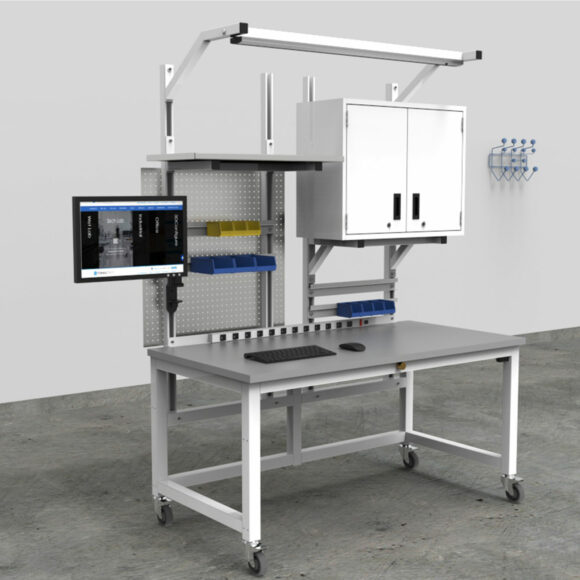
- Workflow efficiency (travel distance, handoffs, queuing)
- Integration of AI and automation at the bench (power/data density, vision, edge compute)
- Ergonomics & safety (multi-shift comfort, injury reduction)
- Quality (defect/scrap tied to bench-level steps)
Document baselines where possible and set day-30 and day-60 checkpoints after go-live to verify ROI.
Choose the project-lead — Week 2
There isn’t one “right” answer; there’s a right-for-you answer. Decide who coordinates design decisions, submittals, and schedule:
- Lab architect–led when scope spans building systems/adjacencies or you need complex programming.
- Dealer–led when speed and procurement orchestration are paramount and many selections are known.
- Facilities/Lab management–led when internal teams have bandwidth and want direct control, with vendor support.
Ask four clarifying questions up front: Who owns budget, timeline, approvals/validation, and stakeholder communication? Making this explicit prevents slowdowns later. We work comfortably with any of these models. As soon as ownership is defined, the next critical lever is bringing in partners who can reduce rework and accelerate submittals—this is where early coordination with Formaspace makes a measurable difference.

Engage Formaspace early — Week 2–3
Early involvement from our design and engineering teams eliminates rework and accelerates submittals. In the first consult, we typically align on:
- Flexibility/modularity (how often bays reconfigure; swap-friendly storage)
- Multi-shift ergonomics (height adjustability, reach envelopes, task zoning)
- Safety & visibility (emergency stops, sightlines; light curtains where applicable)
- Specialty furniture needs (cabinets, carts, drawer/door mix, secure storage)
- ESD strategy (surfaces, grounding points, carts, verification routines)
- Worksurface families by zone (chemical-resistant, ESD-safe, stainless, phenolic)
- Utilities & cable management (power/data density, raceways, panel-mount ports)
- On-carpet/off-carpet adjacencies and IT/ELN touchpoints
(HVAC sits with your MEP team; coordinate early so furniture and services play well together.)
Rough layout and product decisions — Week 3–4
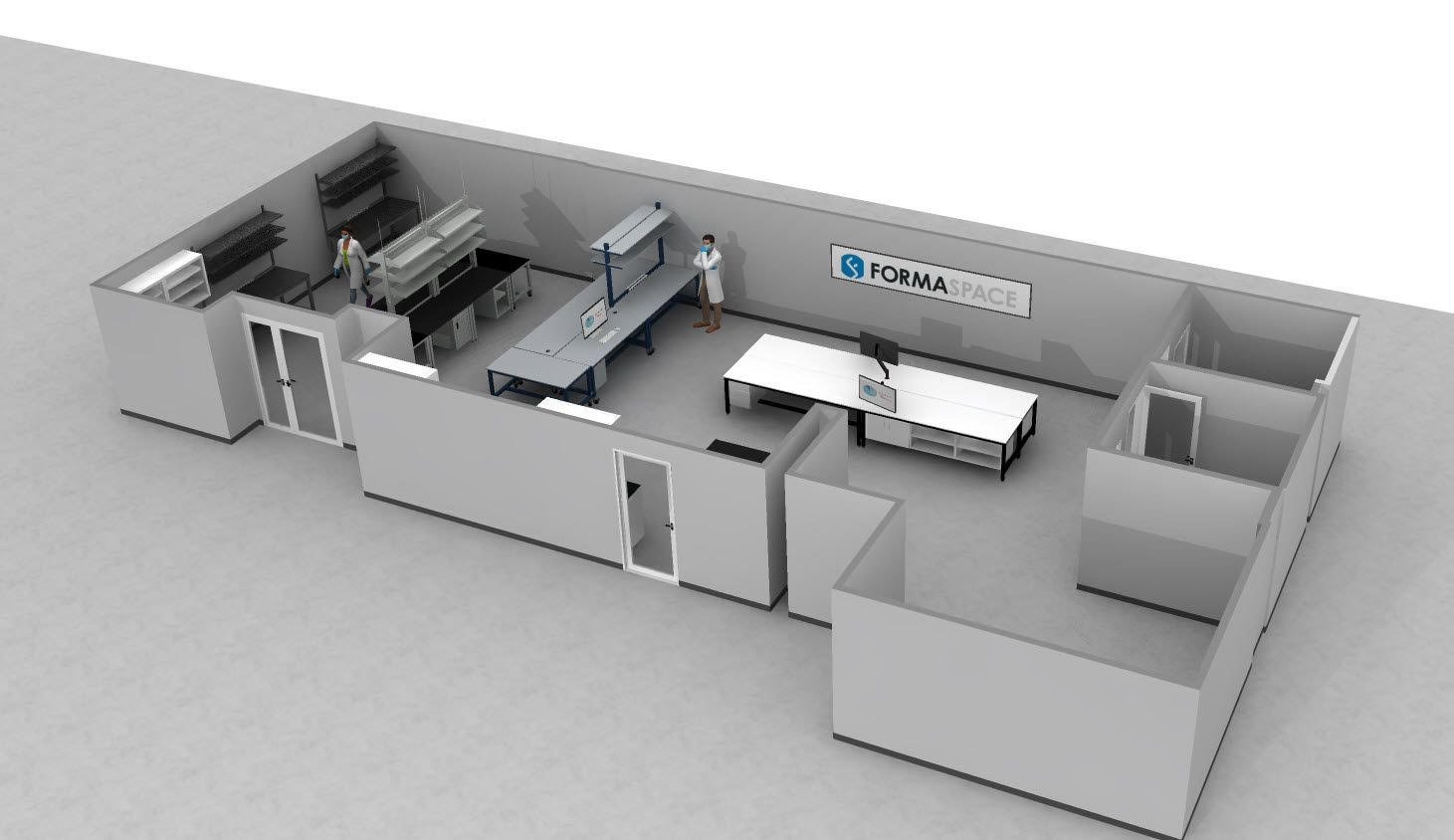
Translate goals into a first-pass layout. Confirm clearances, instrument footprints, and utilities. Then lock core systems:
- FLX Services Lab Bench as the collaboration and services backbone (center services, back-to-back workflows, clean cable management)
- RGX Modular Casework for reconfigurable storage and utilities that scale across rooms and sites
- Specialty items as needed (fume hoods, compounding benches, ESD carts, general-purpose cabinets)
Standardize heights, rail/hole patterns, raceways, finish palette, and worksurface families. Those decisions create a repeatable kit for room types and multi-site consistency—without sacrificing custom fit where it matters.
Drawings and submittals — Week 4–6
Define the digital workflow by partner:
- Dealers in CET; A&D in Revit—both fully supported by Formaspace
- Produce plans/elevations, cut sheets, MEP notes, and an ESD grounding plan
- Reconcile comments once, then freeze the selections and the room schedule
Procurement and production — Week 6–14
Place orders against the approved package. Typical furniture production runs 6–8 weeks, depending on mix and volume. To keep the schedule crisp:
- Sequence deliveries by area (phase where possible)
- Establish a staging plan and a spares strategy for mission-critical parts
- Specify cabinets/casework appropriate to the application and environment
About the “90-day” promise: Treat this as a design-through-approvals sprint that gets you installation-ready. Production and shipping can overlap the tail end of that sprint. On larger programs, some installs may land just beyond 90 days—the point is to eliminate chaotic submittals and late changes that push projects by months, not weeks.
Installation and handoff — Week 14–15
Confirm site readiness, install, and close the punch list. Train teams on:
- Height-adjustable operation and safe reconfiguration basics
- ESD verification steps and documentation
- Labeling, barcoding, and ELN/IT touchpoints at the bench
Run your day-30 and day-60 KPI checks to confirm the sprint delivered the outcomes set in Week 1.
What NextGen Labs solves (the big three)
Efficiency. Less wasted movement, cleaner handoffs, and faster flow of information between on-carpet and off-carpet zones.
Visibility. Science becomes central and transparent, which accelerates communication and collaboration.
Talent & culture. Inspiring environments support retention and help multidisciplinary teams work side-by-side.
Want to go deeper?
- NIH Design Requirements Manual (DRM): widely used planning and technical criteria for biomedical labs — https://orf.od.nih.gov/TechnicalResources/Pages/DesignRequirementsManual.aspx
- FGI Guidelines (healthcare facilities): baseline planning/design guidance when labs sit within healthcare programs — https://fgiguidelines.org/codes/editions/
- ANSI/ASSP Z9.5 – Laboratory Ventilation: core ventilation standard impacting hood selection and room strategy — overview: https://blog.ansi.org/ansi/ansi-assp-z9-5-2022-laboratory-ventilation/
- ISO 14644 (cleanrooms): cleanroom classification and design framework — index of parts: https://www.iso.org/ics/13.040.35.html
- USP <797> Sterile Compounding: requirements that drive pharmacy cleanroom layout and casework choices — https://www.usp.org/compounding/general-chapter-797
- CDC/NIH BMBL (6th ed.): biosafety planning framework for microbiological/biomedical labs — https://www.cdc.gov/labs/bmbl/index.html
- ANSI/ESD S20.20: establishing an ESD control program (surfaces, grounding, carts, verification) — https://www.esda.org/store/standards/product/314/ansiesd-s20-20-2021/
- SEFA standards (casework, benches, fume hoods): authoritative guidance for lab furniture performance and configuration — https://www.sefalabs.com/

Ready to start your 90-day plan? Share your floor plans and goals, and we’ll translate this outline into an installation-ready package anchored by FLX Services Lab Bench and RGX Modular Casework, tuned to your ESD, chemical-resistance, and multi-shift needs. Contact the team: https://formaspace.com/contact/#consultants