
As 2014 Draws to a Close, it’s Time to Pick Our Top Story of the Year
We’ve covered a lot of topics this year which makes it hard to choose just one trend or news story to be number one. But we feel that health and wellness at the office is our top news story for 2014.

Health and Wellness at the Office is a Good News / Bad News Story
The good news is that there are so many new advances in technology to track our health and encourage us to exercise more, to watch what we eat and to monitor our vital signs. The bad news is that our transition to a service economy combined with today’s modern conveniences has led an increasing number of us Americans into a sedentary lifestyle. While some jobs in agriculture, in manufacturing, in warehouse shipping and distribution, and in the food service industry still demand standing on your feet all day, more and more of us are working at a computer with a rolling desk chair with everything right at hand. No need to stand up except take a bio break!
The Lancet: Bad News About Our Sedentary Lifestyle
The case against our increasingly sedentary lifestyle has been building for many years. A widely cited analysis in the medical journal The Lancet identifies strong evidence that lack of physical activity has, on a world-wide average basis, increased our risk for coronary heart disease by 6%, type II diabetes by 7%, as well as breast by 10% and colon cancers by 10%.
“Sitting is the New Smoking”
The catchy expression “sitting is the new smoking” really caught on in 2014. It summarizes the problem we face very clearly. The Lancet study concludes that inactivity causes 9% of premature mortality worldwide. Generally speaking, most of us find our eyes glaze over when we read statistics, but new catch phrase Sitting Is the New Smoking, which came into widespread use in 2014, sums up the situation perfectly. Sitting really is bad for you. In fact, more and more it looks like doing any one activity repeatedly for too long is bad as well. There are even new concerns about ergonomic problems when using tablets and smart phones — giving you ‘Tablet Neck’ as this report from the Harvard School of Public Health discusses.
What’s the Solution? Let’s move!
What’s been the response for this growing public health crisis? Let’s take a look at some of the government and private sector responses.
Government Response
First Lady Michelle Obama has made increasing physical activity in the fight against childhood obesity her signature initiative through her Let’s Move campaign, which launched in early 2010. Here she is challenging television late-night talk show host Jimmy Fallon to a competition at the White House:
https://www.youtube.com/watch?v=Zm7M2BGmgJM
Michelle Obama has also championed changes in the National School Lunch Program to increase the consumption of healthy fruits and vegetables. Public health measures included in the 2010 Affordable Care Act are also beginning to have an effect. In November, the Food and Drug Administration (FDA) announced the long-delayed requirement that chain restaurants, vending machines, movie theaters, ice cream shops and other locations be required to post calorie counts for each food item they sell on their menus.
There are also numerous other wellness incentives, credits and requirements in the Affordable Care Act regarding health and wellness. For example, many healthcare tests must now be offered at little or no charge to encourage wellness. The concept is to improve public health and reduce healthcare costs by identifying illnesses at an early stage before more expensive care is required.
How Have Companies Who Provide Healthcare for Workers Responded?
It’s becoming more and more common for companies to provide health risks assessments, fitness programs, wellness coaching, smoking cessation programs, flu shots and obesity management for their workers as part of their benefits package. Companies are beginning to see an increasing return on investment for these wellness programs, as discussed in this Harvard Business Review report. Johnson & Johnson, for example, estimates their wellness program has saved the company $250 million on health care costs in one decade. During the period 2002 to 2008, they calculate their return on investment was $2.71 for every dollar spent.
Response from the Furniture Industry
Technology companies and those of us in the furniture industry have also responded to the need to improve health and well-being at the office. 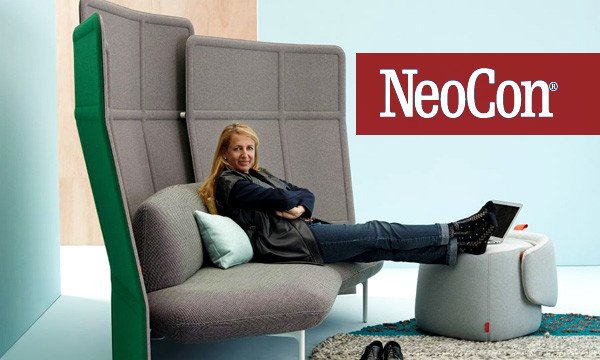 As you know, Formaspace has long been an advocate of increasing ergonometric design through its line of technical furniture — designed to improve workflow in a wide variety of industries, including laboratory science, manufacturing, warehousing and distribution, military and government and healthcare. We noted earlier in the year at Neocon 2014, the contract furniture industry annual convention, that the entire industry has taken notice of the need to improve health and well-being at the office. 2014 saw widespread publicity surrounding movable furniture and standup desks, designed to keep you moving while at work. Here humorist and commentator Mo Rocca takes a look at treadmill desks in the workplace:
You can learn more about movable furniture in an article we wrote earlier in the year. High-technology companies have also driven the health and well-being story to the top of the headlines. There are quite a few wearable electronic devices today that can measure your fitness progress, including the number of steps that you take during a day, the number of stairs you climb, your heartbeat rate and so forth. If you are doing some last minute Christmas shopping, here’s a review of some of the devices on sale. Many of us are waiting for the availability of the Apple Watch, which was announced this past fall. Its focus on fitness tracking has helped keep health and wellness in the news.
Focus on Wellness: Privacy at the Office
 We were also glad to see another take on health and wellness at the office in 2014 — a renewed focus on our mental well-being. We’re talking about the renewed interest in establishing quiet, private spaces to work in the modern office. As we noted during our review of Neocon 2014, Susan Cain‘s book Quiet: The Power of Introverts in a World That Can’t Stop Talking is driving a renewed appreciation for the value that peace and quiet in the workplace can have on worker productivity.
What Were the Other Leading Stories in 2014?
First Runner – Up: Logistics and Rapid Distribution and Warehousing Systems
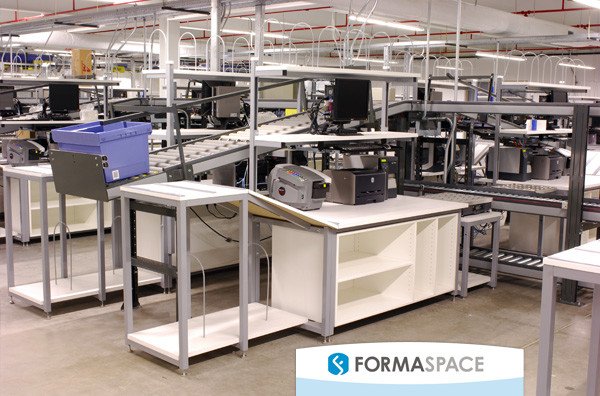 Our first runner-up is the story of advanced logistics used by industry giants like FedEx, UPS, Amazon and Walmart — which have transformed the distribution and warehousing industries. At this time of year — in the lead up to Christmas — we know these systems are stressed to their maximum; so far we haven’t heard any reports of problems. We wish continued good weather across the nation for our friends working the Christmas holiday rush.
Second Runner – Up: The Renewal of American Manufacturing
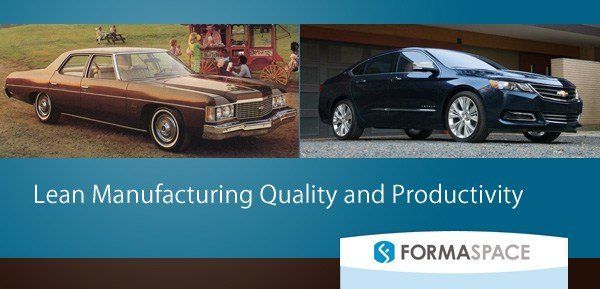 We presented several articles on how American manufacturing is roaring back over the past year. American companies are not only re-shoring factory jobs back to the U.S., but more and more foreign corporations are opening up American manufacturing facilities. A case in point is the European conglomerate Airbus, which plans to assemble Airbus jets in Alabama. One of the Airbus executives noted this past July that they anticipate their factory costs will be lower in Alabama than in China.
What About Aerospace, Energy, and Laboratory Research Discoveries?
 If you felt that one of our stories about aerospace, energy and laboratory research deserved to be the top story of 2014, don’t worry. We didn’t select these stories this time because we think that they will become even more important next year. We’ll have more to say on this next week as we bring you our predictions for the top industry news in 2015.
Contact Us Here at Formaspace
In the meantime if you are contemplating a redesign of your office, factory, healthcare facility or laboratory, Formaspace can be an invaluable resource. We can build unique custom furniture, such as large conference tables, computer workstations and workbenches that will give your office that ‘industrial design’ look that everyone wants. Give us a call at 800.251.1505 and we’ll be happy to exchange ideas and talk about how we can work together.